Games
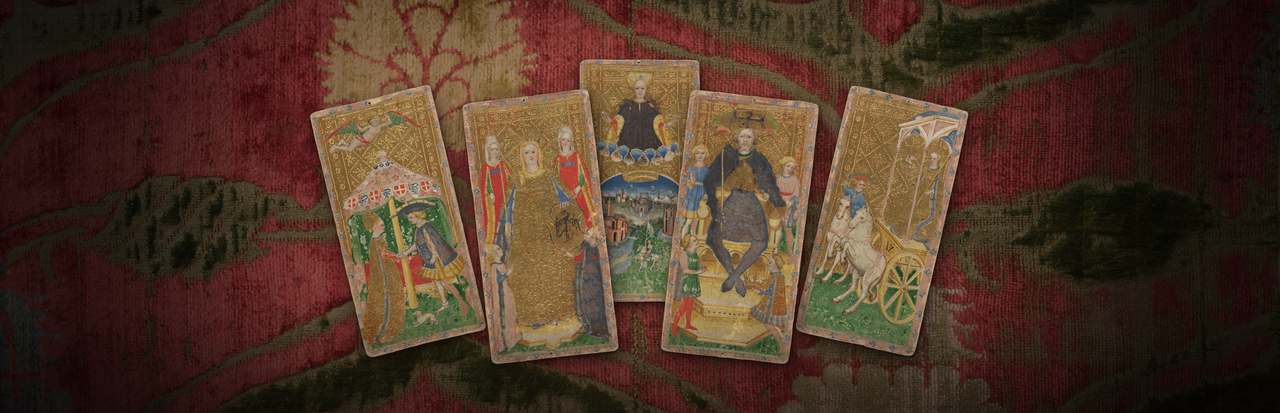
Five Cary-Yale Visconti cards fanned out on red velvet
Coming Soon Milan, 1445

TRIONFI

Before tarot told fortunes, it was a game.

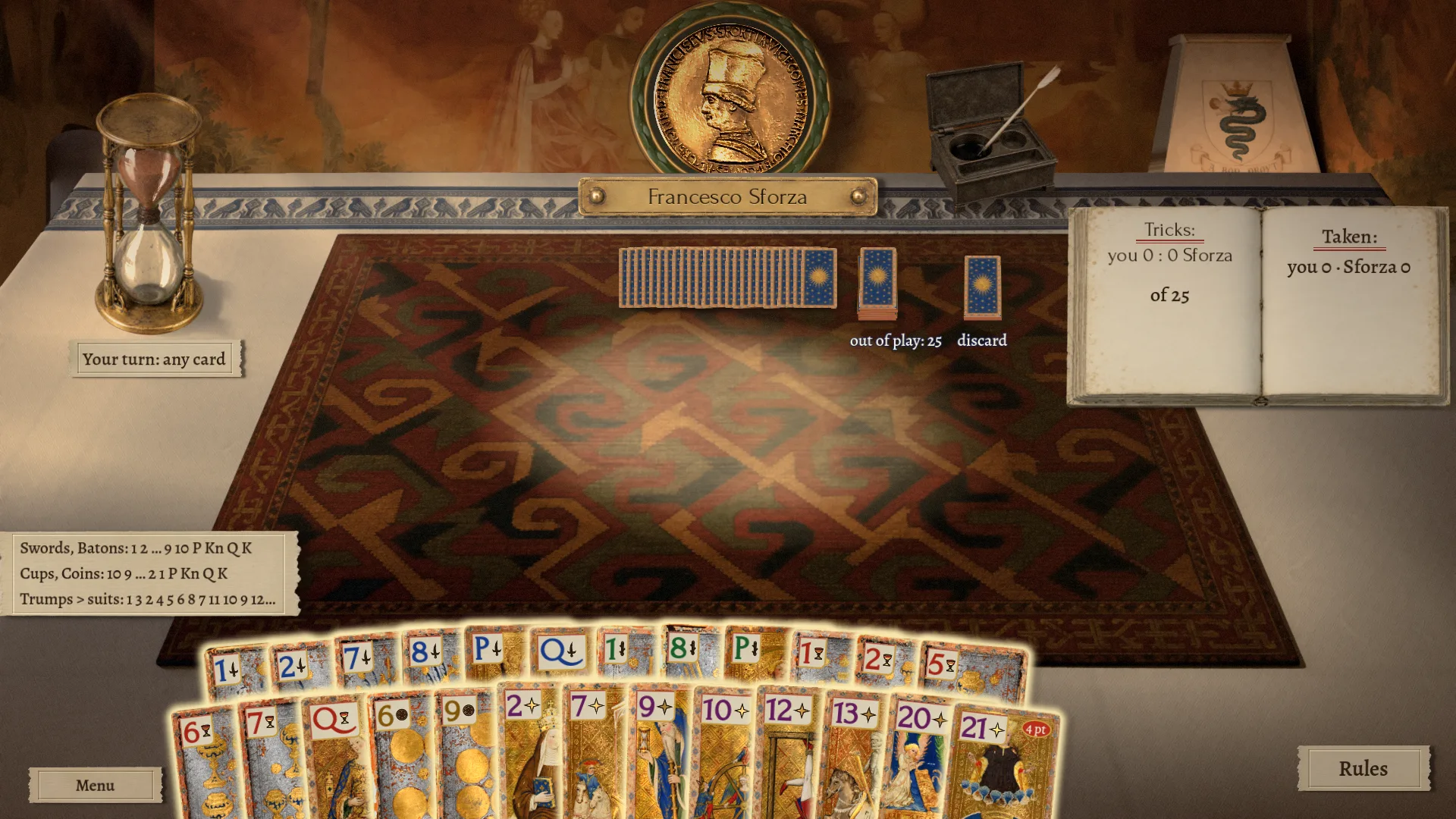
Play trionfi — the game the tarot deck was made for — with the Cary-Yale Visconti cards, rules rebuilt from historical sources and a museum of every card, face and object at the table.

Coming to Steam for Windows · Free demo coming soon
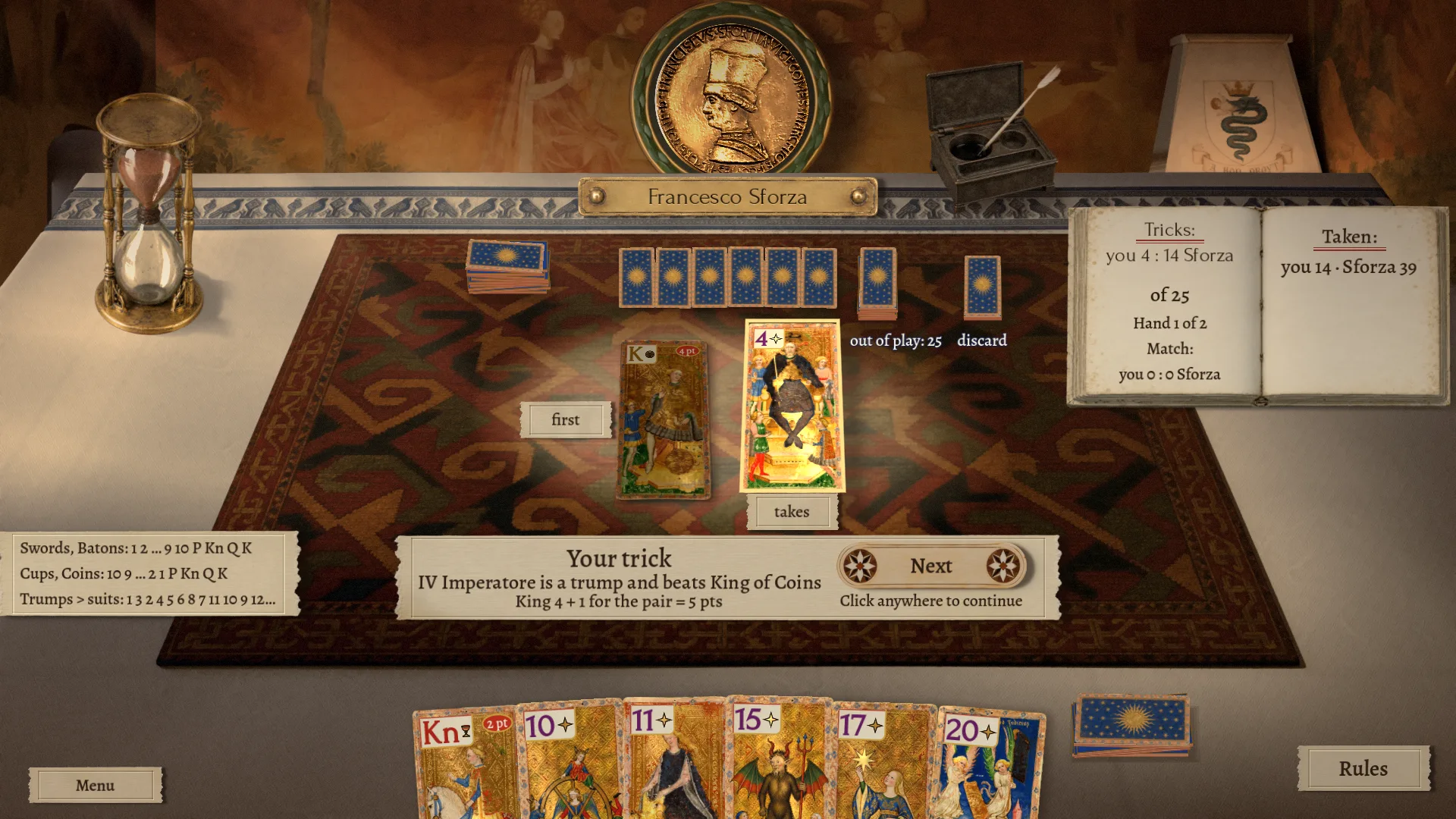
First look (47 s). Music: “Suonatore di Liuto” by Kevin MacLeod (incompetech.com), CC BY 4.0.

A deck that survived nearly six centuries

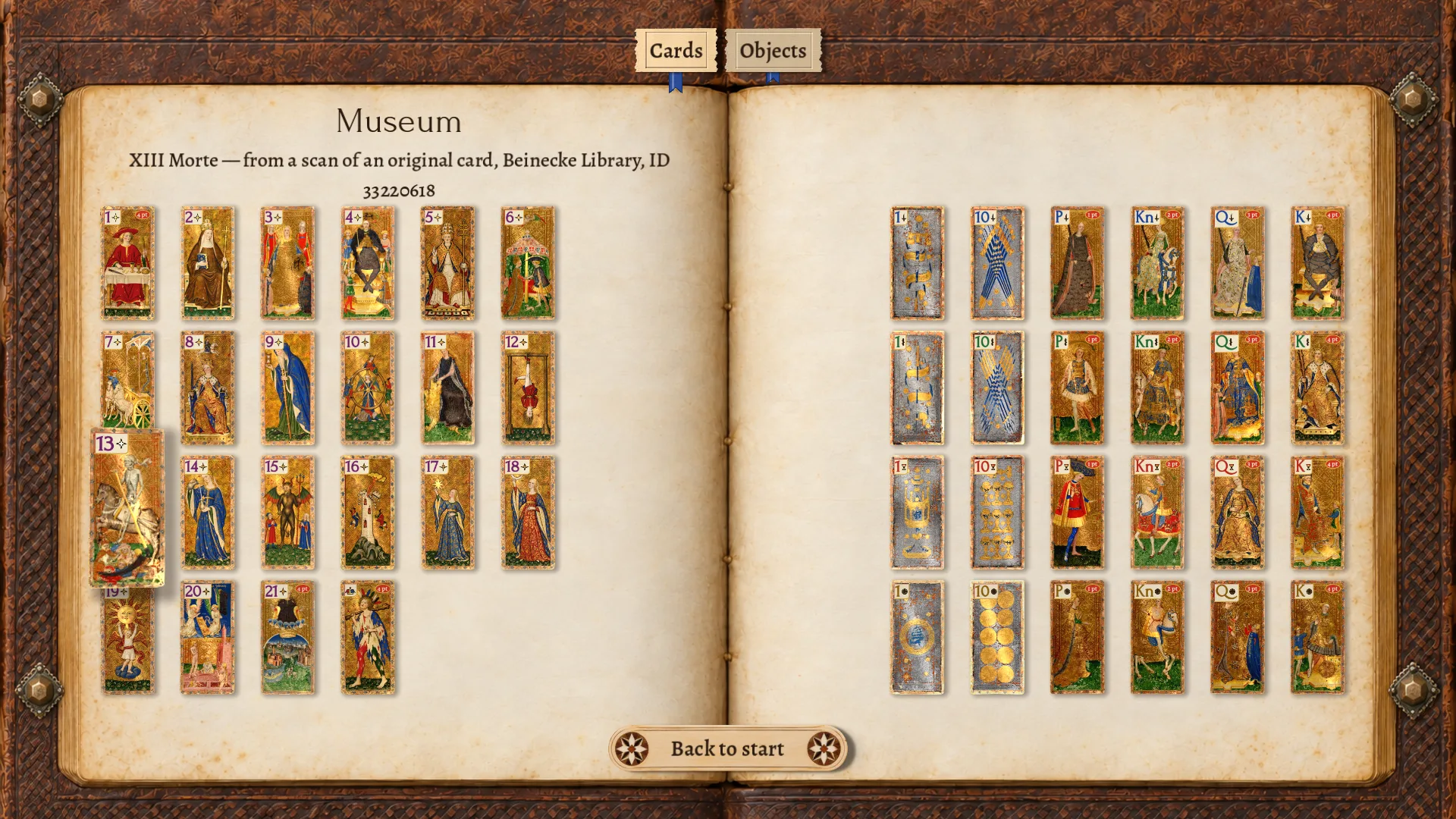
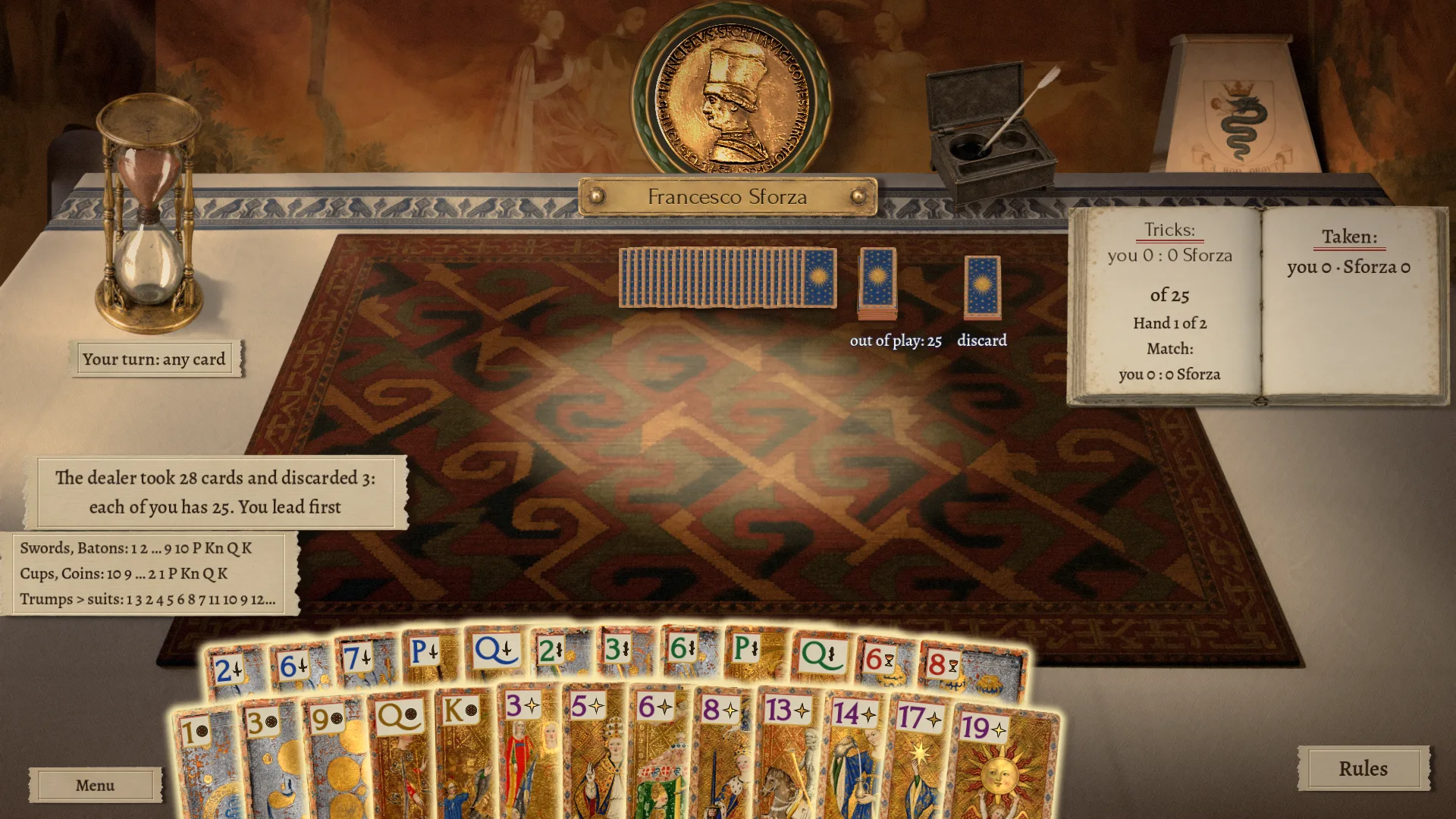
The cards are the Cary-Yale Visconti tarocchi, one of the oldest tarot decks in the world, kept at the Beinecke Rare Book & Manuscript Library, Yale University. The surviving cards come from scans of the originals. The lost ones are modern reconstructions after related decks of the time, made with AI and marked as such in the game.

Rules rebuilt from the sources

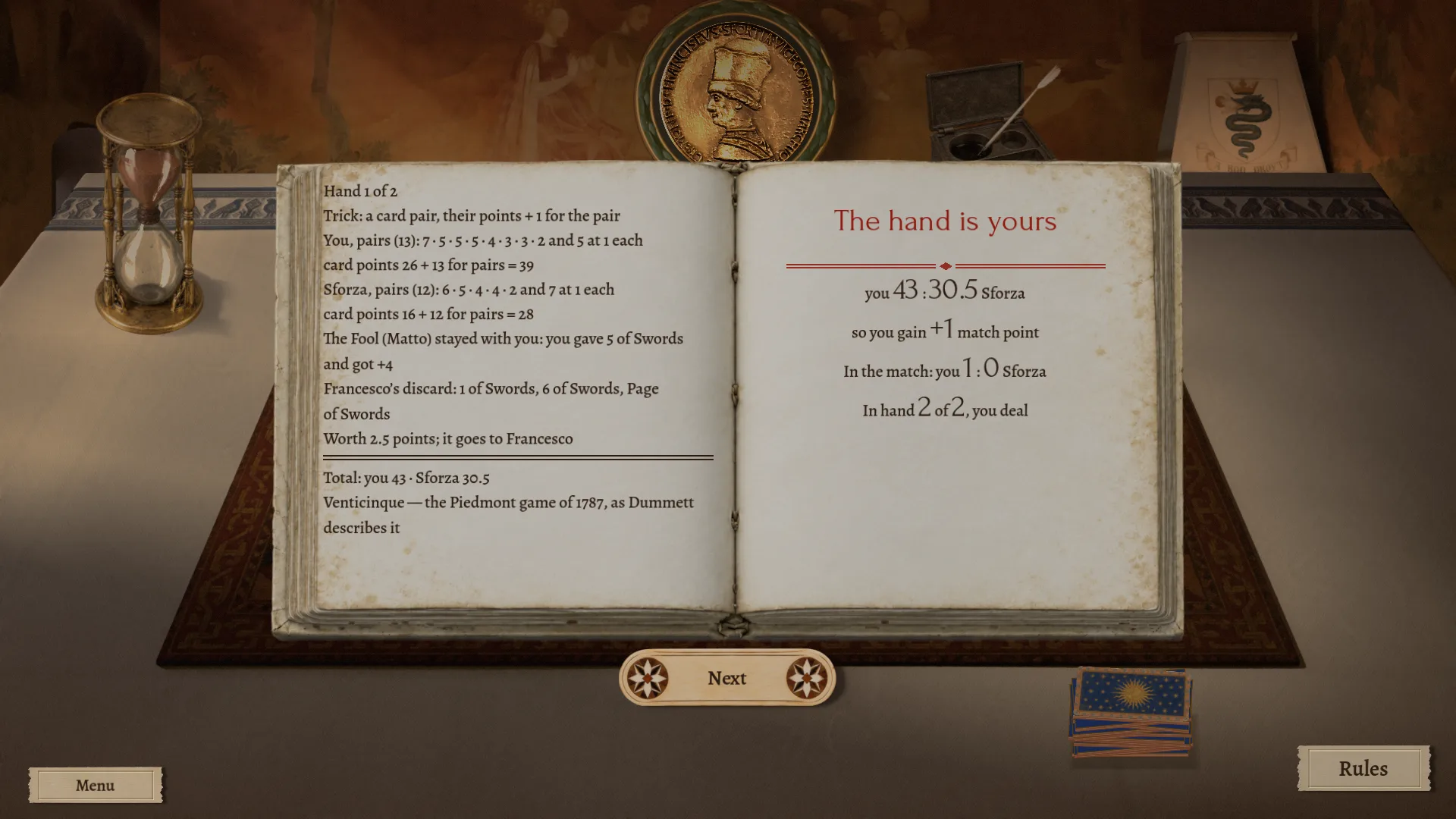
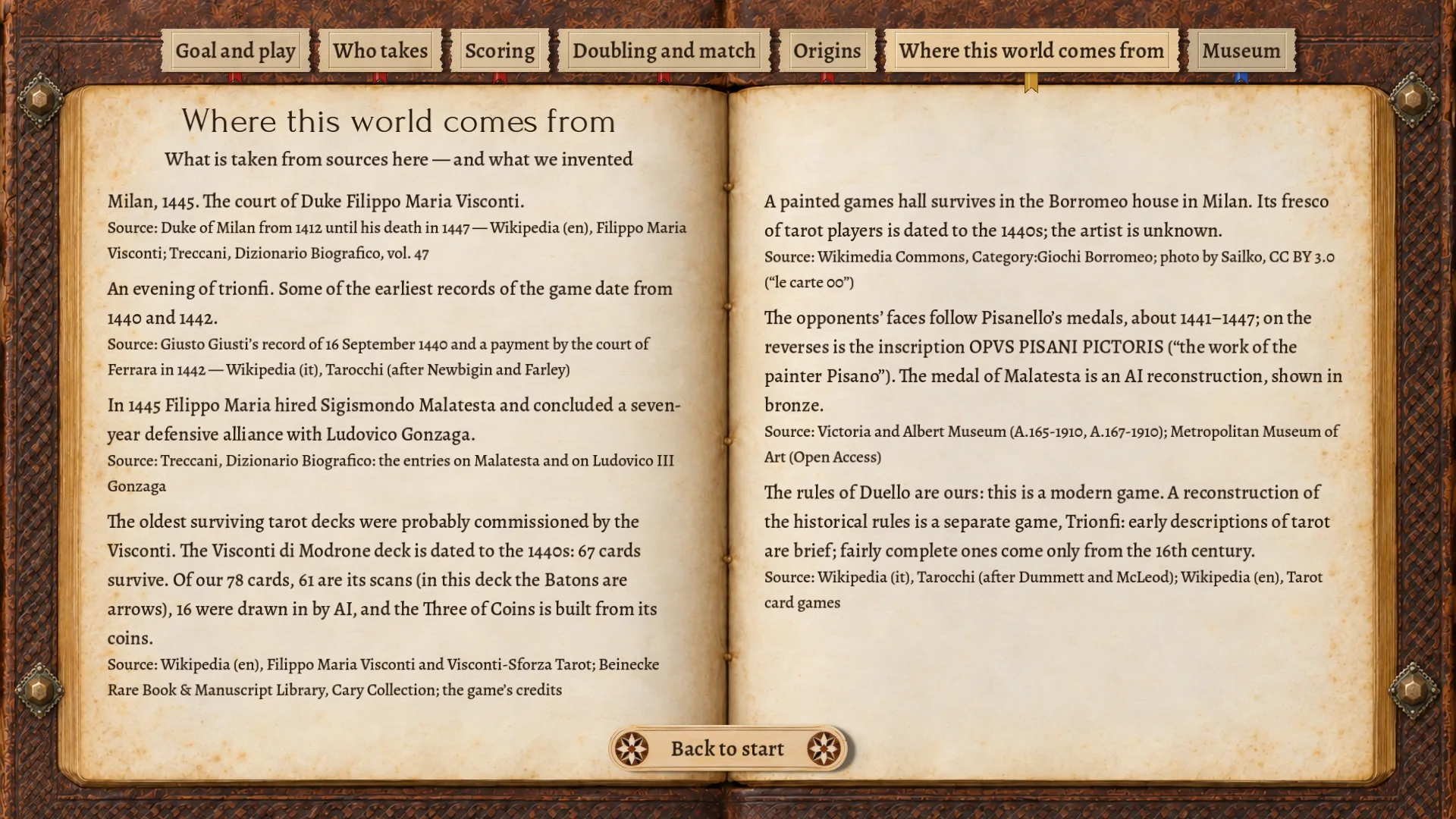
No one wrote down the rules of trionfi in the 1440s. The game rebuilds them from the earliest records — a sermon from around 1500, later rule books from Milan and Piedmont, and the work of historians of playing cards — and its rule book shows where each rule comes from.

From a first duel to trionfi

Start with a quick duel that teaches the deck, then play trionfi itself in its Piedmont form of 1787 — the game of triumphs, reconstructed from the sources.

Opponents from Pisanello's medals

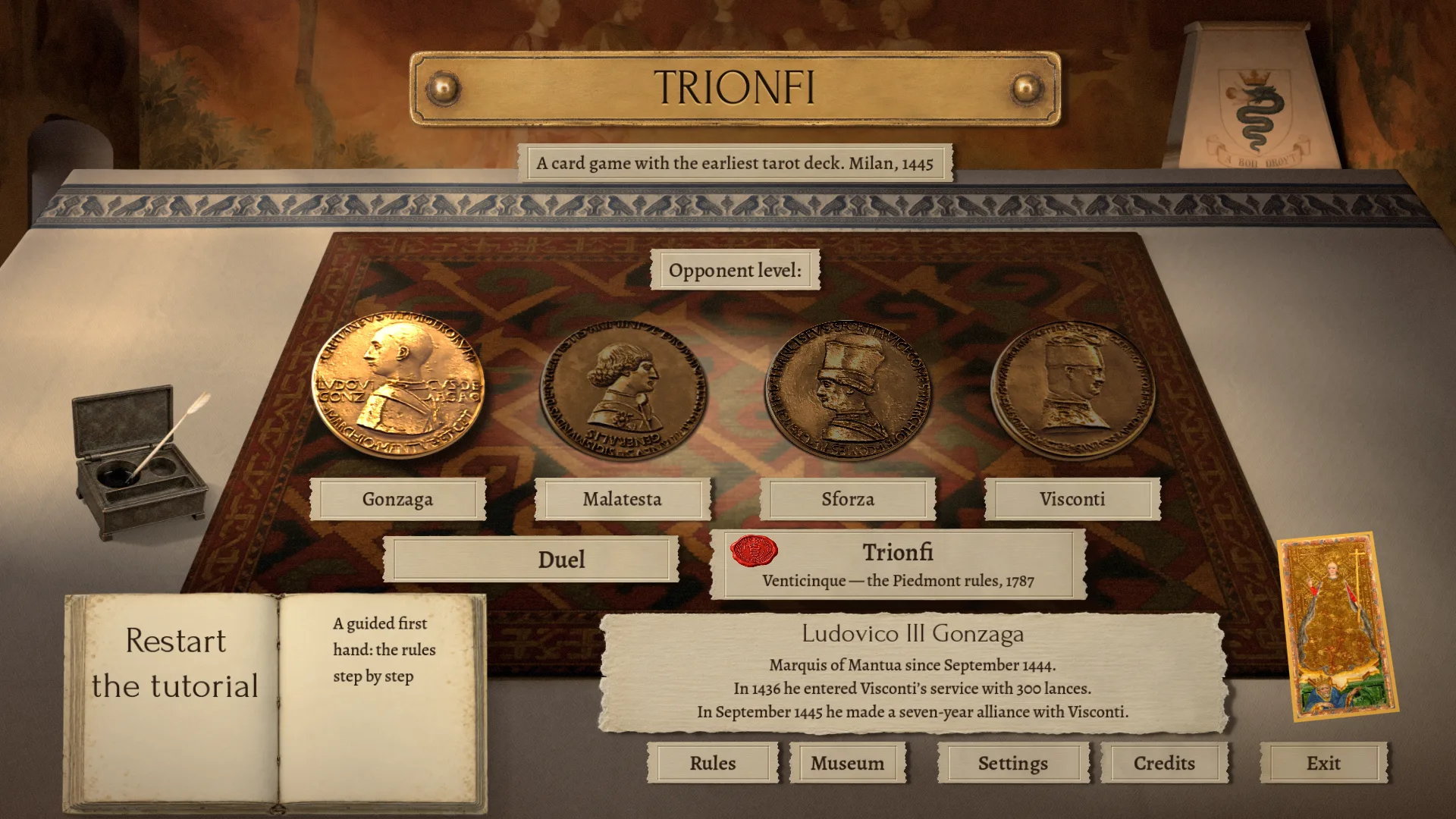
Play against lords of the court whose faces come from Pisanello's medals of the 1440s — Ludovico Gonzaga, Sigismondo Malatesta, Francesco Sforza and the duke himself.

A museum at the table

Every card, face and object in the hall has its own page: what it is, where it comes from, what is original and what is reconstructed.

Learn as you play

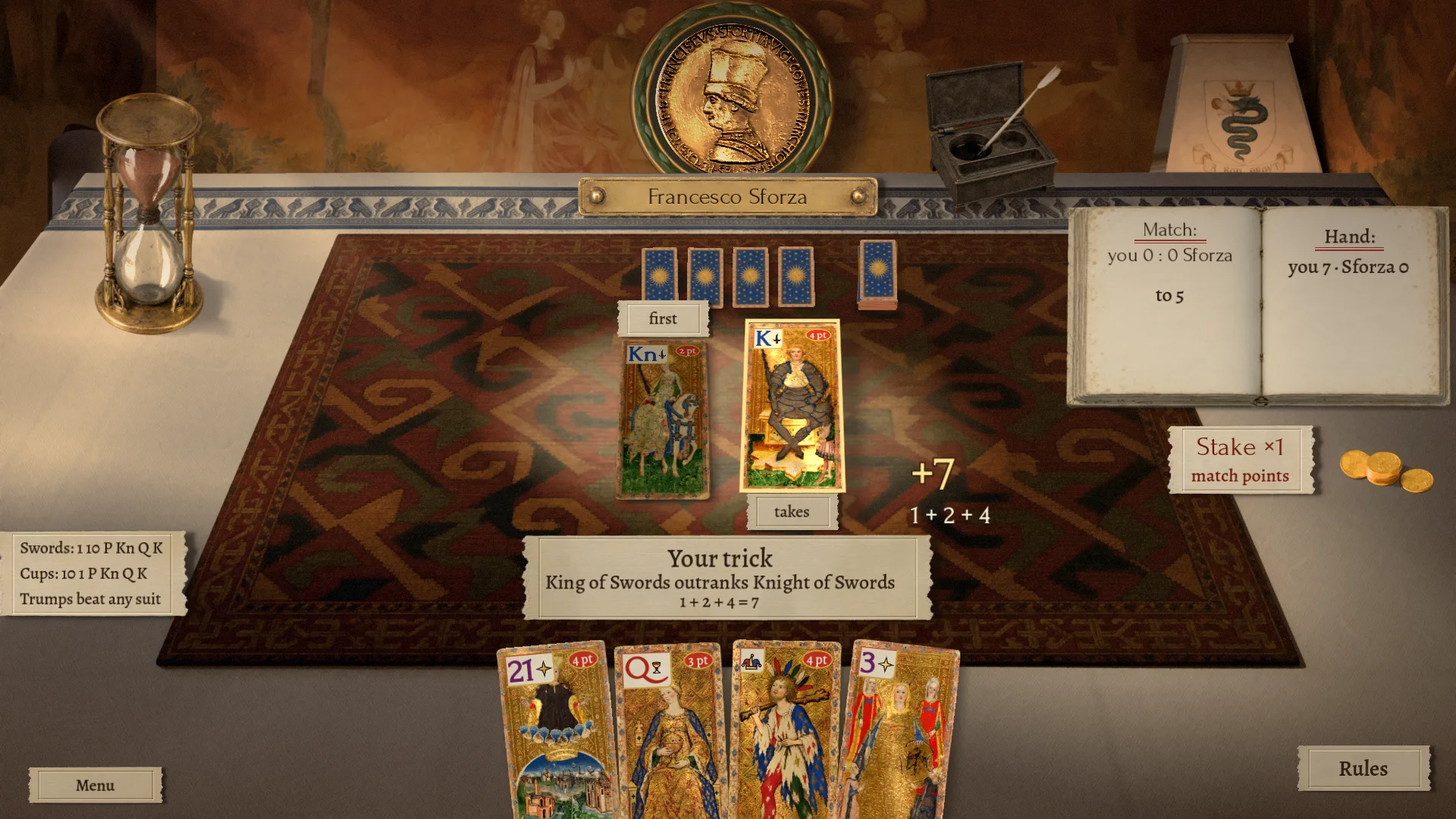
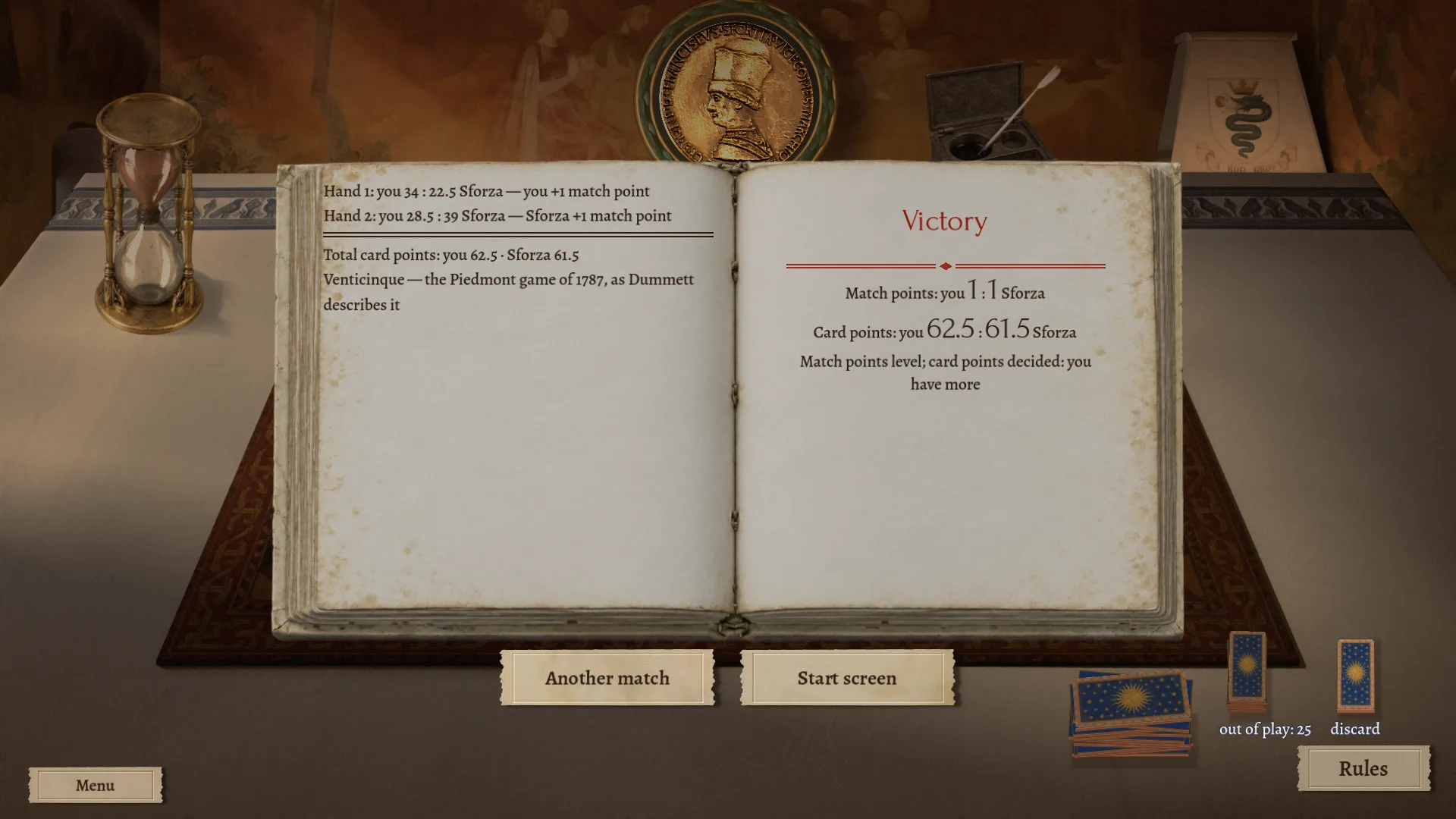
A guided first hand teaches the rules step by step, and every trick tells you why it was won.

In development for the full game

A table for up to four players — with bots and with friends by invitation — and more card games of the era.

Card images: Cary-Yale Visconti tarocchi, Milan, 1440s. Beinecke Rare Book & Manuscript Library, Yale University (open access). Lost cards are AI reconstructions and are labelled in the game. Full credits and licences are in the game's credits.